If you’re undergoing chemotherapy or need frequent venous access for medical care, you’ve probably heard about implantable ports, sometimes called port-a-caths. These small devices can make a world of difference in your treatment experience, eliminating the need for constant IVs and providing reliable access for chemotherapy, blood draws and medication delivery.

At Orange County Interventional Radiology in Lake Forest, Irvine and Mission Viejo, our experienced team specializes in placing implantable ports using minimally invasive techniques. For patients who need regular treatments, it can make care easier, faster and less stressful.

Book Appointment

What Is an Implantable Port?

A port is a fully implantable device connected to a central vein that provides easy venous access for patients requiring frequent fluids, blood draws or IV infusions. Unlike a tunneled catheter, all components remain completely under the skin. Implantable ports allow your healthcare provider to deliver medications and other therapies directly into the bloodstream without the need for a new IV every time, making treatments easier and more comfortable.

How Does an Implantable Port Work?

Book Appointment

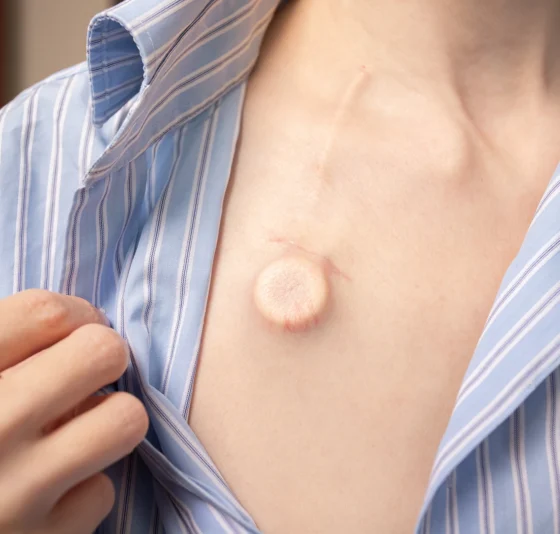
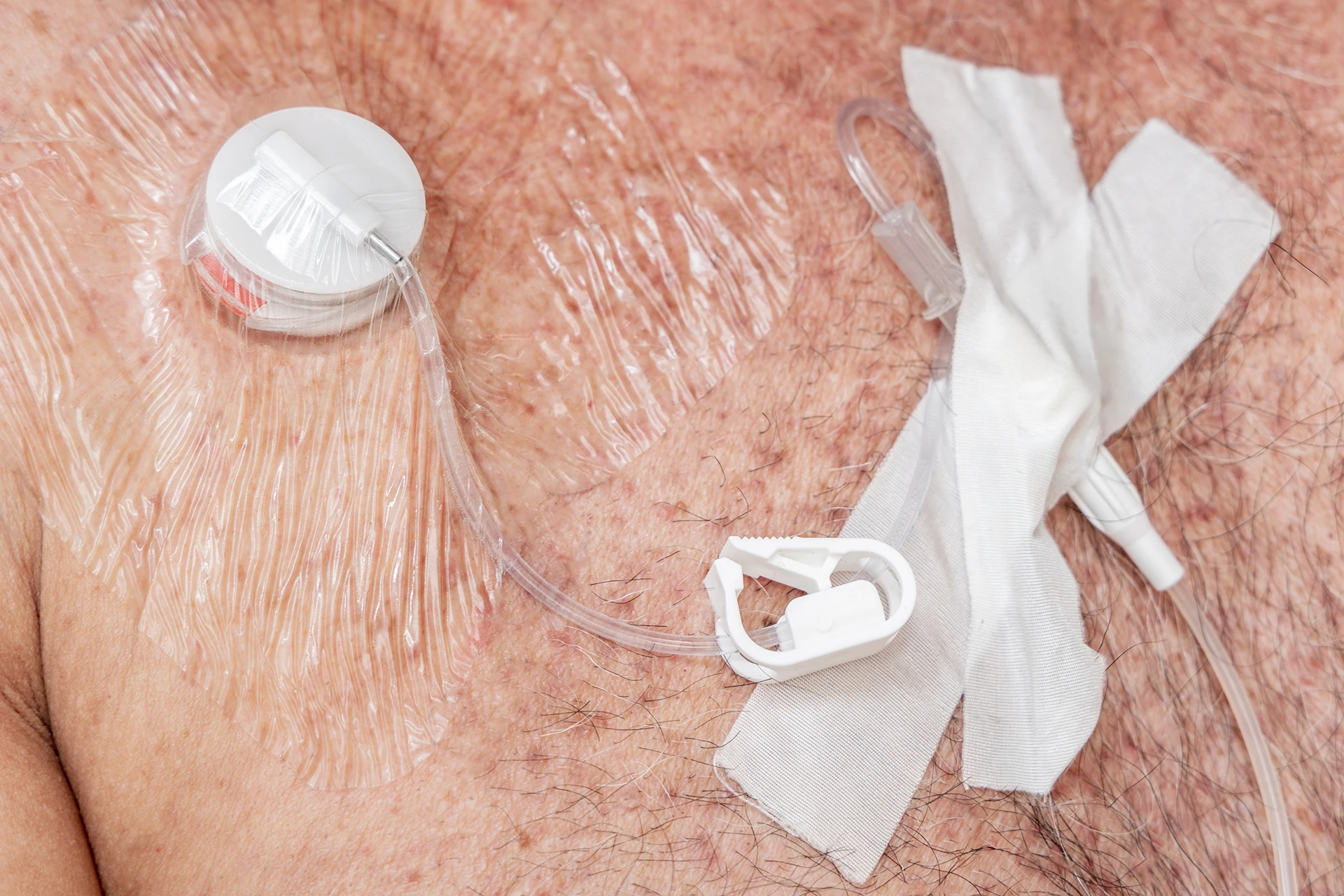
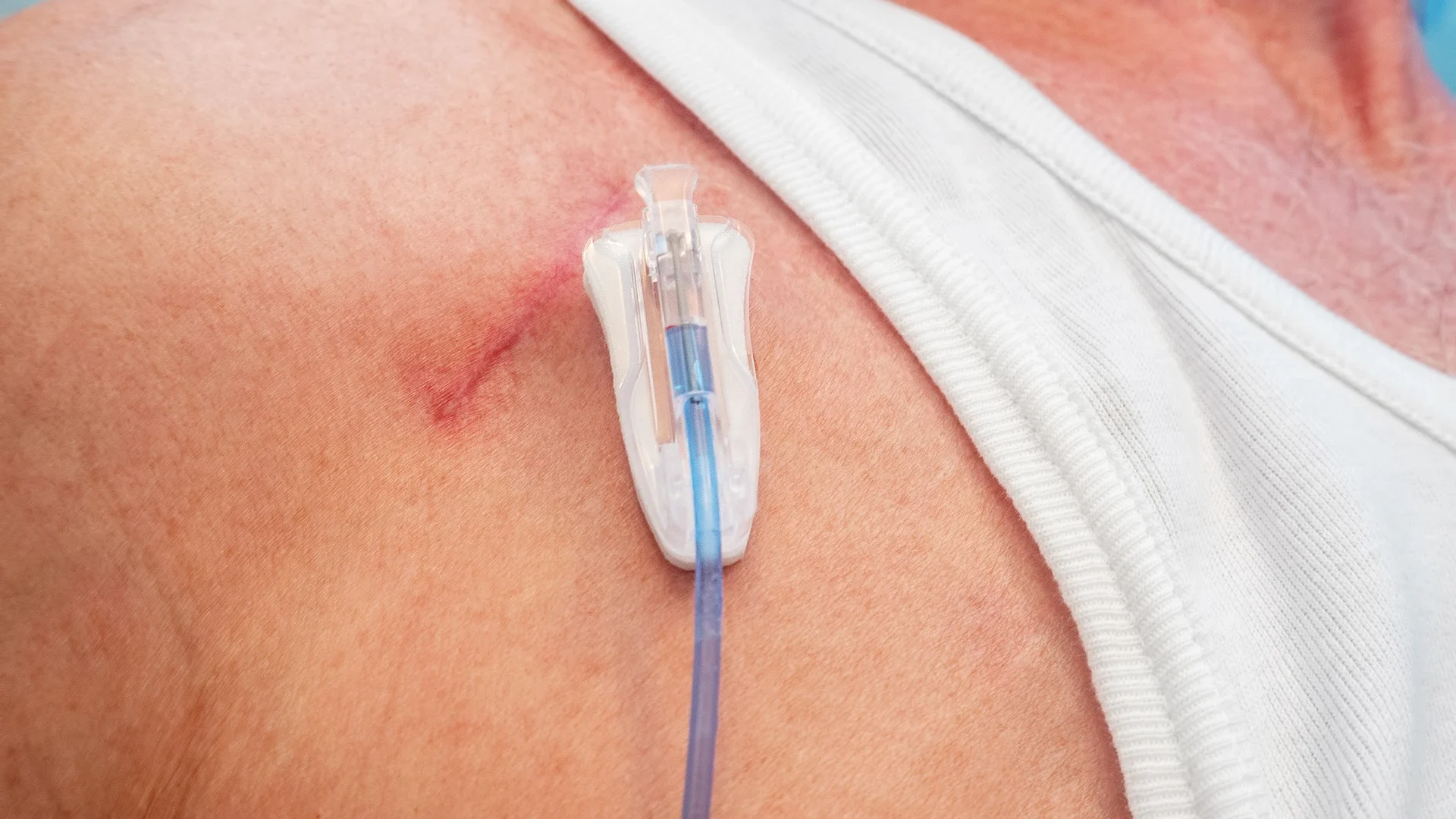
An implantable port consists of two main components: a small reservoir about the size of a quarter with a self-sealing rubber disc at the top, and a thin, flexible catheter that connects the reservoir to a large vein. The reservoir sits just beneath the skin, typically on your upper chest, and can be felt but is less visible than a tunneled catheter. When you need treatment, your doctor can access the port using a special needle to deliver medication or draw blood.

Unlike temporary IV lines that need frequent replacement, implantable ports can remain embedded for months or even years, depending on your treatment needs. They’re designed to withstand thousands of needle insertions and can handle various types of medications, including chemotherapy drugs that might be too harsh for smaller veins.

Ideal Candidates for Implantable Ports

Implantable ports benefit patients who need frequent or long-term IV access for medical treatment. You might be a good candidate if you meet several of these criteria:

  • Undergoing chemotherapy or immunotherapy treatments
  • Requiring frequent blood draws for monitoring
  • Needing long-term antibiotic therapy
  • Receiving regular blood transfusions
  • Have difficult-to-access peripheral veins
  • Want to avoid repeated IV needle sticks
  • Need reliable access for emergency medications

Implantable ports provide consistent venous access with less visibility than external catheters and no activity or lifestyle restrictions, as everything is safely beneath the skin. If you’re undergoing treatment that requires frequent IV access, our team can evaluate your medical history and overall health to determine if port placement is appropriate for your situation.


What to Expect During Treatment

Implantable port placement is a minimally invasive procedure that takes about an hour to complete. It is performed on an outpatient basis, meaning you’ll be able to return home later the same day. To keep you comfortable, local anesthesia will be used to numb the area, usually the right side of the chest, and conscious sedation is administered to help you relax. You’ll be awake, but have little to no recollection of the treatment process.

The actual port placement involves two small incisions: one to create a pocket for the device, and another to access the vein of catheter insertion. These incisions are typically less than an inch long and heal relatively quickly with proper care. Our interventional radiologists use advanced imaging to guide the catheter to the superior vena cava, the major vein that returns blood to the heart. This allows for optimal blood flow and reduces the risk of clot formation.

We then confirm that the catheter is properly positioned before securing the reservoir in the chest pocket and closing the incisions with dissolvable sutures or Steri-Strips. After your procedure, you’ll be sent home with specific instructions on how to care for your new port.

Implantable Port Recovery

Recovery from port placement is generally straightforward, with most patients resuming normal activities within a few days. You may experience some tenderness and swelling at the incision sites, which is completely normal and should improve over the next week or two. Once the incisions heal, the device will not be visible but you will be able to feel it under the skin.

Why Choose OCIR

When it comes to implantable port placement, experience and precision make all the difference. At Orange County Interventional Radiology, we understand that every patient’s situation is unique, which is why we take the time to explain the procedure thoroughly and address all your concerns before treatment. Our outpatient facility offers the convenience of same-day procedures with the expertise you’d expect from a hospital setting, and our board-certified interventional radiologists use the latest imaging technology to ensure precise port placement.

Take the First Step Toward Relief

At Orange County Interventional Radiology, our board-certified interventional radiologists have extensive experience placing implantable ports. If you need a port for medical treatment, we’re here to help. Contact our team today to schedule a consultation at one of three convenient locations in Lake Forest, Mission Viejo and Irvine and find out if port placement is right for you.

FAQ'S

Got Questions? We Have Answers

How does an implantable port differ from a tunneled catheter?

Both tunneled catheters and implantable ports provide long-term venous access for patients undergoing certain medical treatments. However, a tunneled catheter is a soft, flexible tube that is threaded into the appropriate vein, typically through an incision point near the neck or chest. It features a cuff that helps secure it in place once new tissue grows (in about three to four weeks) and one or more external tubes that exit the skin near the entry point.

An implantable port is a small device that provides venous access with no external components. It consists of a small chamber, or reservoir, with a self-sealing access point just beneath the surface of the skin, attached to a catheter that is threaded into a large vein. With an implantable port, your doctor will use a needle to pierce the chamber to give medication or draw blood.

How long can a port stay in place?

Implantable ports are designed for long-term use and can safely remain in place for months or even years, depending on your treatment needs. Some patients keep their ports for several years without any problems. Your doctor will determine the appropriate timeline based on your treatment plan and overall health.

Will I feel the port under my skin?

Yes, you’ll be able to feel the port as a small, firm bump under your skin, similar to a large coin. Most patients adjust to this sensation quickly and find it doesn’t interfere with daily activities. You can bathe, shower and exercise freely without the worry of managing any external components.

How do I care for my port between treatments?

When not in use, your port requires minimal maintenance since it’s completely under the skin. You should protect the area from trauma and watch for signs of infection like redness, swelling, or unusual warmth. Your healthcare team will provide specific instructions for monitoring your port and when to seek medical attention.

Will airport security detect my port?

Most ports are made of materials that don’t typically trigger airport metal detectors. However, we recommend carrying a port identification card provided by your healthcare team when traveling. This card explains what the device is and can help facilitate security screening if needed.

Our Locations

Three Locations, One Commitment: Your Care

Lake Forest

29300 Portola Parkway, Suite B
Lake Forest, CA 92630
Toll Free: (800) 267-5677

Hours of Operation

Monday: 8:00 AM – 5:00 PM
Tuesday: 8:00 AM – 5:00 PM
Wednesday: 8:00 AM – 5:00 PM
Thursday: 8:00 AM – 5:00 PM
Friday: 8:00 AM – 5:00 PM
Saturday: Closed
Sunday: Closed

Mission Viejo

26921 Crown Valley Parkway, #120
Mission Viejo, CA 92691
Toll Free: (800) 267-5677

Hours of Operation

Monday: 8:00 AM – 5:00 PM
Tuesday: 8:00 AM – 5:00 PM
Wednesday: 8:00 AM – 5:00 PM
Thursday: 8:00 AM – 5:00 PM
Friday: 8:00 AM – 5:00 PM
Saturday: Closed
Sunday: Closed

Irvine

18102 Sky Park Circle South, Suite D
Irvine, CA 92614
Toll Free: (800) 267-5677

Hours of Operation

Monday: 8:00 AM – 5:00 PM
Tuesday: 8:00 AM – 5:00 PM
Wednesday: 8:00 AM – 5:00 PM
Thursday: 8:00 AM – 5:00 PM
Friday: 8:00 AM – 5:00 PM
Saturday: Closed
Sunday: Closed